Proposal 3: Help the clown complete his hat!
Social organisation
Individual.
Timing
20 minutes.
Objectives
-
Recognize and name geometrical shapes.
-
Recognize and name colours.
-
Follow geometrical series of different complexity.
-
Understand direct questions about geometrical shapes by answering properly.
Content
-
Comprehension of simple instructions accompanied by visual supports.
-
Use of verbal and non-verbal resources to communicate with others.
-
Relation of symbols, pronunciation and meaning from written models and oral expressions. Intuitive use of decoding.
-
Designation of two-dimensional figures: triangle, rectangle, square, circle, star, pentagon, hexagon, octagon.
-
Series and patterns.
-
Use of verbal, graphic and symbolic language to represent numbers.
-
Vocabulary: geometrical shapes.
-
Structures: it’s a…
Description
Students review the name of geometrical shapes in English with the flashcards. Then, they are given a worksheet with a clown and a blank hat, and they complete it following series of geometrical shapes provided by flashcards, paying attention to the shape and the colour requested. The teacher can review the geometrical shapes while the activity is being developed by asking questions to the students about their series (e.g.: what’s the name of this shape in English?), and children have to respond: “it’s a …”
Material and scaffolding
Flashcard with the geometrical shapes:




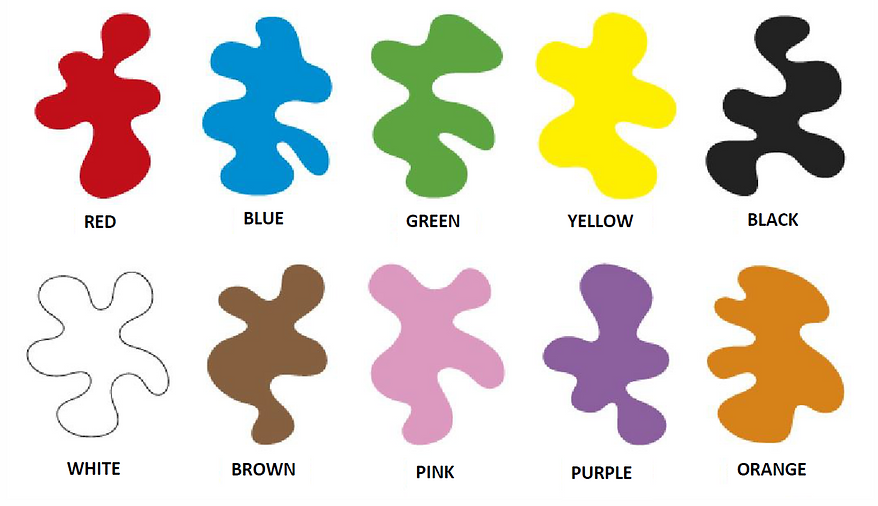
Flashcard with colours:
Shapes series flashcards:

1st grade

2nd and 3rd grade
Instructions flashcard:

Worksheet:

Attention to diversity
Flashcards with the geometrical shapes and the colours are available for students as visual support in case they are not able to remember them. Students choose some series flashcards or others depending on their level (there are diverse levels of difficulty regarding the series flashcards).
Assessment
The teacher assesses if students have learned the geometrical shapes by looking at the completion of the worksheet successfully, and by asking direct questions to students.
Also, they do a self-assessment of whether they liked the activity or not by circling the face that better represents what they feel, and another self-assessment for the understanding of the activity by circling the image that better represents their understanding.